Content to process in learning
Sat, 22 Apr 2023 07:19:06 GMT
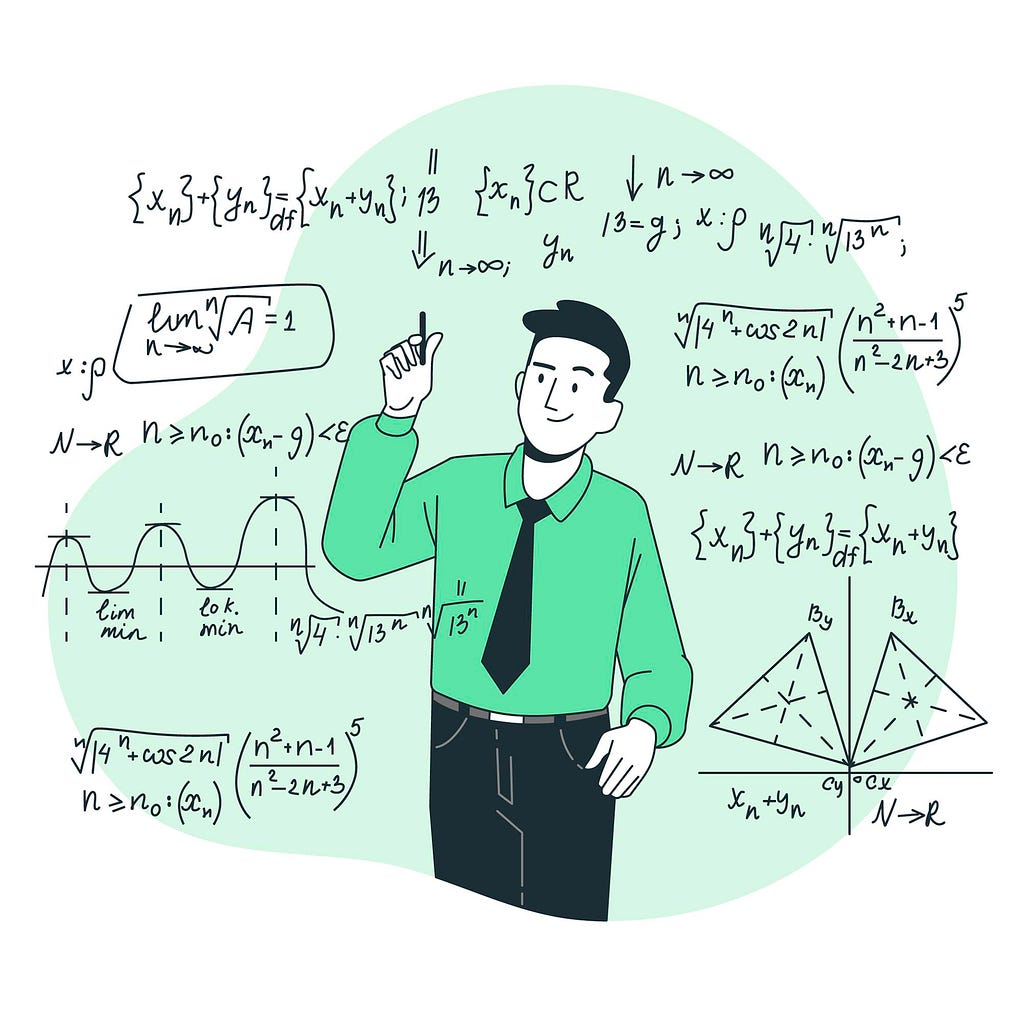
I remember a scene from the movie “3 Idiots” where Rancho asks his classmates to find the meaning of the words “Farhanitrate” and “Prerajulisation.” As we all know, they were actually the names of his friends. When the professor, Virus, criticized Rancho’s teaching methods, Rancho retorted that he was simply teaching Virus how to teach, and Virus knew engineering better than him. Although the movie doesn’t delve much into the problems that classrooms have, Dr. Ramanujam believes that the main problem starts in mid or high school, where the teaching process is lacking.
That’s why we need to shift the focus from Content to Processes:
Why It Matters
Well so that students like naveen don’t struggle in a traditional classroom where they are underestimated. Like Dr. Ramunjam said we underestimate today’s students very much.
And, In today’s world where information is readily available at our fingertips, it’s becoming increasingly important to focus on the process of learning, rather than just the content. Education is primarily focused on memorization and retention of information, but with the rise of technology and automation, this approach is becoming less relevant.
What Is Process-Oriented Learning?
Process-oriented learning is an approach that emphasizes the process of learning over the content being taught. It involves engaging students in activities that allow them to explore and discover information for themselves, rather than simply being told what to learn and memorize. This approach focuses on developing critical thinking and problem-solving skills, which are essential for success in the 21st century.
Like when Dr. Ramanujam mentioned the story of Naveen
I couldn’t help but feel inspired by the potential of math and its ability to engage and interest children. It’s easy for us to fall into the trap of believing that math is a subject that will surely give you headaches, but this story shows us just how much creativity and fun can be found in the subject.
I particularly appreciated the approach taken by the sir in this situation, who recognized the importance of showing children the relevance of math in everyday life. By giving real-world examples, they were able to help the children see the value in math and dispel the misconception.
Naveen’s story was also fascinating to see. I was impressed by his use of geometry to analyze the spider web and derive formulas for its perimeter and area. Even more impressive was his attempt to solve the problem of finding the shortest route for the spider to reach its trapped insect.
Of course, Naveen faced challenges in his exploration, which is a common experience in math. But his persistence and willingness to experiment highlight the importance of perseverance in pursuing mathematical knowledge.
This story shows the potential for creativity and curiosity in math, and the importance of fostering a love for the subject in children. Who knows what breakthroughs in research or exploration could result from children pursuing their interests and passions in math?
There was a guessing game involving a number between one and a hundred. It piqued my interest because of its learning potential for children, not just in mathematics but also in critical thinking and problem-solving. During the video, Dr. Polya asked his audience to guess the number he was thinking of. One person suggested using logarithms, but Dr. Polya simply replied that he would just tell them the number just ask what is the number . I found this part of the video quite amusing, as Dr. Polya emphasized the importance of thinking like a child when approaching a problem. This example demonstrated that sometimes the simplest solution is the best one, and that we should not overcomplicate things with unnecessary calculations or formulas.
Then he mentions to make it more interesting we can say ask yes or no questions to guess the number, and the goal is to guess the number in as few questions as possible.
As I delved deeper into the topic, I learned that children can learn from each other through different strategies and questions, and it even introduces them to the concept of logarithms. The game’s underlying message is that teachers should not limit themselves to traditional teaching methods and instead find ways to make learning more interactive and enjoyable.
Does square root of 2 exists ?
The argument regarding the lack of mathematical debate and discussion in classrooms is an interesting point. While most mathematics classes focus primarily on presenting information and problem-solving, there is immense potential in encouraging debate and discussion within mathematics. In fact, the subject matter itself can provide ample opportunities for debate and discussion.
One interesting thing to think about is whether there is a number called the square root of 2. This can lead to good discussions about what math things are and what we can and can’t do with them. It’s also fun to talk about infinity, math rules, and problems that seem to go against those rules.
Let’s talk about the two scenarios he presented,
Two examples show how different teaching methods can affect how well students understand math. Mr. Garg teaches formulas, while Kavita Jain’s class is asked to use their knowledge of perimeter to design a playground with a certain area. Both show how important it is for teachers to answer students’ questions and explain math concepts clearly. Kavita Jain’s students can use their knowledge in a real-life situation by designing a playground, which encourages thinking and creativity. Schools want to create an exciting learning environment for students to learn math and see how it’s relevant in everyday life. The math curriculum includes topics like arithmetic, geometry, algebra, trigonometry, data analysis, and more. Processes like finding patterns, visualizing, estimating, and making connections are essential to developing students’ math thinking skills.
To fully evaluate the curriculum, it’s necessary to have both a mathematical and teaching point of view. Mathematicians work to improve how people understand math. In math problem-solving, it’s not just about finding the right answer. Polya says it’s important to think deeply and create logical arguments. Math requires reasoning and effective communication skills. In school, students often just learn how to find the answer without understanding the concepts behind it. However, true mathematics places a lot of emphasis on critical thinking and inquiry, which can help people appreciate and comprehend it better.
In math classes, students usually solve problems at the end of the chapter just to finish the exercise and somehow score the marks in exams. But there’s more to learning math than just solving problems. Open-ended problems are rare in math classes, but they are helpful for students to learn how to problem-solve and understand math better. It’s a myth that any problem that can’t be solved in five minutes is unsolvable. Some problems have remained unsolved for centuries, but that doesn’t mean they can’t be solved in the future. This proves that math is always evolving.
Mathematics involves various processes such as creating new representations, finding patterns, testing conjectures, and simplifying or generalizing problems. These skills are essential for problem-solving in math, but are not often taught in schools.
The list of important ways to learn math better includes estimation, visualization, reasoning, and argumentation. It’s a shame that many classrooms focus on doing set exercises quickly, without much talking or listening. To help people learn more deeply, it’s important to understand that these skills not only help with math, but also have benefits in other parts of life.
Hans Freudenthal’s philosophy of education emphasizes the importance of allowing children to reinvent mathematics for themselves, guided by what we currently know. This approach emphasizes the active engagement of learners in the process of mathematizing, in which they organize and interpret their experiences using mathematical concepts and tools.
This approach challenges the traditional approach to teaching mathematics, which often emphasizes memorization and rote learning of procedures. Instead, Freudenthal suggests that students should be actively involved in the process of learning, and should be encouraged to use their own reasoning and problem-solving skills to arrive at mathematical insights.
While this approach may require a shift in mindset and expectations for teachers and students alike, the potential benefits are significant. By encouraging students to engage in mathematizing activities, they are developing their mathematical thinking skills in a way that is meaningful and relevant to their own experiences. Additionally, this approach can help students develop a deeper understanding of mathematical concepts and their applications, preparing them for success in real-world problem-solving.
Overall, Freudenthal’s approach emphasizes the importance of active engagement and problem-solving in the process of mathematical learning. By allowing students to reinvent mathematics for themselves, they are developing valuable skills that will serve them well both inside and outside of the classroom.
George Pólya
Setting Context
“Teaching is not a science, its an art you cannot put it in a system but you may have an attitude to it”
What is teaching?
Giving the opportunity to students to discover things by themselves.
No teacher should tell things to students if they wish to learn they shall discover it.
First guess then prove.
All the discoveries were conceived this way.
Finished mathematics consists of proofs.
But mathematics in the making consists of guesses.
Polya’s problem-solving approach is guessing, which is different from how we usually learn math through proofs, theorems, and problems with solutions.
Math is complete when it is proven, but it always starts with a guess when it is discovered.
Even if we make a mistake when guessing how to solve a problem, it can still be useful because it can help us make a better guess and eventually lead us to the correct answer. He advises us to divide challenging problems into smaller, more manageable ones. By solving these simpler problems, we can gain the knowledge and understanding necessary to tackle the original, more complicated problem.
Instead of only focusing on the proofs and theorems that have already been proven, Polya believes that it’s important to discover new problems. He talks about two types of guesses: wild and sensible/logical/reasonable. Wild guesses are made without any thought or evidence to support them, while reasonable guesses are based on observation, pattern, law, and generalization. Reasonable guesses are more reliable because they are supported by data and logic.
Sensible guesses are based on some evidence and reasoning or when we see a pattern, which makes them more trustworthy than wild guesses. As a result, when we have a reasonable guess, we are more confident in it and more likely to follow it through to find a correct solution.
To understand the concept of breaking a plane into parts, let’s start with a simple scenario where there are no planes and only one part. We can split the part into two using one plane. As we add more planes, the number of pieces grows exponentially, and we can find the number of parts by looking for a pattern. To ensure the accuracy of our guess, it’s essential to test it. For example, when we divide a plane with three planes, we may guess that it results in 16 parts, but the correct number of parts is 15 due to the intersection of the planes. This same principle applies when breaking up a three-dimensional space.
To determine the number of parts when dividing a line, we can follow the pattern of n+1, where n is the number of lines. However, this pattern may not always hold true, and it is important to analyze the problem and test our guess to arrive at the correct answer.
In problem-solving, it’s important to follow a hierarchy to approach the problem effectively. First, we need to carefully observe the problem and take note of all the given information and any relevant patterns or relationships between them. Identifying patterns or laws that may exist is the next step, which can be done by looking at similar problems or situations to see if there are any commonalities. Generalizing the problem means finding a way to make the problem more universal and can help us see the bigger picture and come up with a more efficient solution. Induction is an essential step in problem-solving as it allows us to make reasonable guesses or predictions based on our observations and patterns we have noticed in the problem. Analogies can be a useful tool for problem-solving, where we can compare the current problem to a similar situation or concept to gain a better understanding of the problem and come up with a more creative solution. Finally, testing our guess involves taking our proposed solution and evaluating it to see if it makes sense, ensuring that our solution is valid and avoiding errors. Following this hierarchy can help us approach any problem more systematically and efficiently, leading to successful problem-solving.
Problem-solving in mathematics is a crucial skill that involves various steps, including understanding the problem, devising a plan, carrying out the plan, and looking back to examine the solution. The Polya Method of problem-solving helps individuals to approach problems systematically and efficiently.
Understanding the problem is the first step in solving any problem. It involves identifying the unknowns, data, and conditions of the problem. It is crucial to draw figures, use suitable notations, and separate the different parts of the condition. This step helps in creating a clear and concise understanding of the problem, making it easier to move on to the next step of devising a plan.
Devising a plan involves finding connections between the data and the unknown, and if necessary, considering auxiliary problems. This step also involves thinking of related problems or theorems that could be useful. The goal is to obtain a plan of the solution that can be executed in a systematic and logical manner.
Carrying out the plan is the next step, and it involves checking each step of the solution. It is crucial to ensure that each step is correct and can be proven. If there are any errors, it is essential to correct them before moving on to the next step.
Finally, looking back at the solution is the last step, and it involves examining the solution obtained. It is important to check the result and argument, and to see if the result can be derived differently. This step also involves thinking of other problems that could use the same result or method.
Mathematics is a subject that requires both evidence-based reasoning and creativity. It is through identifying patterns and laws that new insights and solutions to problems can be developed. Similarly, the use of analogies and testing our guesses can lead to new discoveries. Problem-solving in mathematics is a dynamic and iterative process that involves multiple approaches and techniques. By being open to new ideas and approaches, individuals can develop a deeper understanding of mathematical concepts and their applications.
At last but not least,
Polya shares an interesting story that highlights the value of reasonable guessing in mathematics. Once, a janitor in a building belonging to the Royal Society in England wanted to differentiate between fact and guess. Meanwhile, John, a member of the society, arrived late for a meeting and still needed to check in his hat. The janitor offered to keep the hat in the cloakroom while John attended the meeting. When John returned, he asked the janitor for his hat, and the janitor gave it to him. However, when John asked how he knew it was his hat, the janitor responded that he did not know for sure, but he knew it was the hat that John had given him. This story demonstrates the power of inductive reasoning and how it can lead to reasonable guesses in problem-solving.
References
Links :
https://medium.com/media/27b04c766b3a7c80267d4983e248748f/hrefhttps://medium.com/media/c603357fd119c4b30af7548d3f491ee6/href